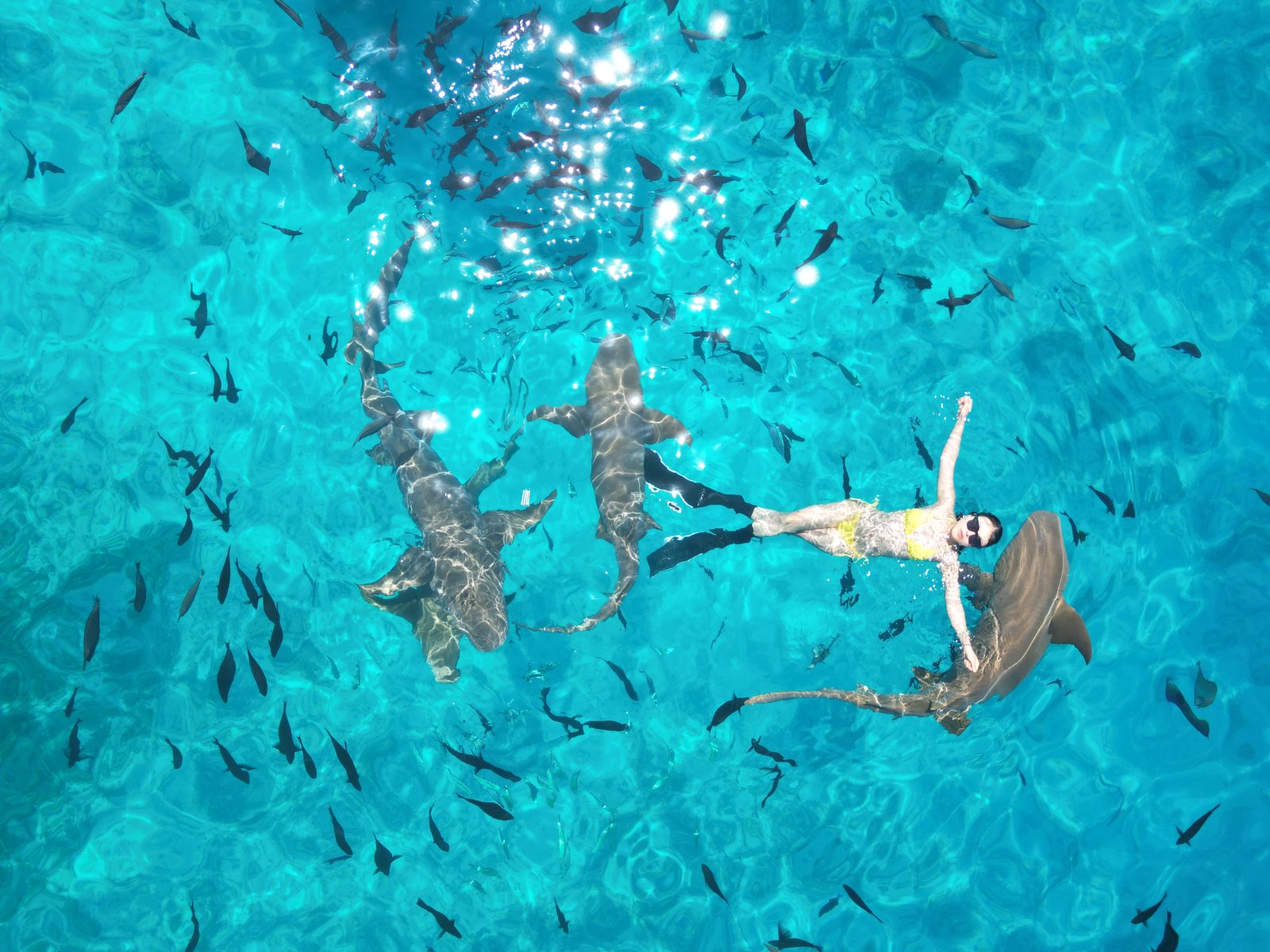
My feed is full of "is ¥10,000 enough for the Maldives?" threads. Growing up I assumed it was somewhere people went once in a lifetime. Turns out we're mostly stuck in a filter bubble — the Maldives you scroll past is the resort Maldives. Local islands run on a completely different price list.
For under ¥6,000 (return flights included; after landing in Male we spent ¥1,314 each — under $200), three of us stayed 8 days, 7 nights: 5 nights on Fulidhoo, 1 in Male, 1 in Hulhumale. Snorkelling, the drop-off wall, freediving, night fishing, turtles, dolphins, sharks, stingrays — we did all of it. Same ocean as the resorts, and more boat trips to choose from.
Not for you if you hate hassle (most routes connect, then you still need a boat to the island), hate the sun (08:00–16:00 is genuinely too hot to be outside), or care a lot about food (even top-end resorts will have you craving instant noodles).
Want a private resort and a butler? Wrong post. Everything below is about one local island: Fulidhoo.
1. Where the money actually went
The total (per person)
| Item | Per person (CNY) | Notes |
|---|---|---|
| Return flights | ¥2,678 | Departed 30 Mar via Bangkok, arrived Male 31 Mar; returned 7 Apr via Kuala Lumpur |
| Accommodation (7 nights) | ¥1,806 | 5 nights Fulidhoo + 1 Male + 1 Hulhumale |
| Everything after landing | ¥1,314 (≈ $200) | Breakdown below |
| Osmo Action 6 rental | ¥100 | — |
| Data / roaming pack | ¥23 | Bought a local SIM (never topped it up) |
| Total | ¥5,921 |
How the $200 after landing was spent
| Item | Amount (USD) | Notes |
|---|---|---|
| Speedboat to the island | $50 | Male → Fulidhoo, 1 hour |
| Boat trips | $75 | Night fishing $20 + two trips $55 |
| Island cleaning fee | $30 | $5 per person per day × 6 days on the island |
| Food, shopping, odds and ends | ≈ $45 | We cooked most meals; paid one fish-prep fee |
| Total | ≈ $200 (≈ ¥1,314) |
Three of us, flights and hotels excluded, spent $590 in total.
2. Flights and getting to the island
Most routes to Male connect through Kuala Lumpur, Bangkok or Colombo. We flew out on 30 March via Bangkok, landed in Male on 31 March, and flew home on 7 April via Kuala Lumpur. The pattern:
- From the Greater Bay Area: as low as ¥2,000 when timing is good
- From other Chinese cities: within ¥3,000
- These fares usually exclude checked luggage — travelling together, buy it on one ticket only and let that person carry everyone's bags. That's what we did, including a very large box of food.
We flew AirAsia on most of this trip. Budget carrier rules are worth knowing in advance:
- No free meals or water — buy a bottle in the departure lounge and carry it on. Thirst beats hunger on a long flight.
- The cabin is freezing — bring a jacket and wear long trousers. Almost no luggage space, and miserable without them.
Two ways onto the island
| Option | Price (per person) | Duration | Notes |
|---|---|---|---|
| Speedboat | $50 (or 800 MVR) | 1 hour | Daily departures, hotel can book it, pay on the boat |
| Public ferry | $3.50 (or 59 MVR) | 4 hours | Only three days a week |
You save $46 and pay for it with 3 hours — short on time, take the speedboat; short on money, take the ferry. But the ferry only runs three days a week, so check the schedule or you'll be stuck in Male. Coming back: Fulidhoo → Male speedboat runs twice daily at 06:30 and 13:30; the ferry leaves at 10:45.
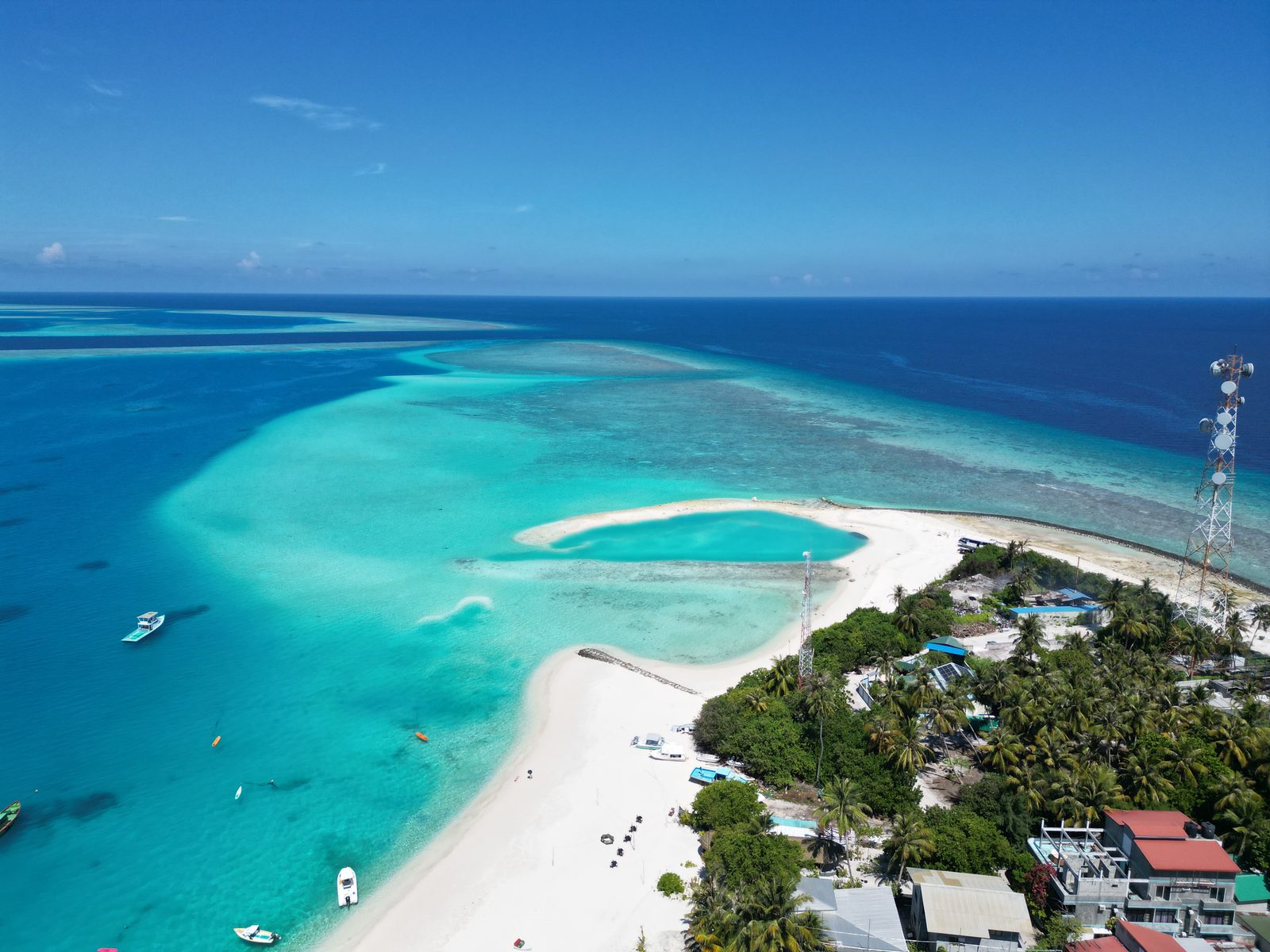
Fulidhoo's lagoon and sandbank · drone shot
I recommend this island for one simple reason: it looks as good as a resort island — no misleading photos, and it's better in person.
3. Where to stay: book early, compare hard
On local islands, ¥300–500 per person per night is the normal range. The variable that moves the price most: whether meals and drinks are included. A real comparison from Fulidhoo:
- The place we booked: we booked late and had no options left — over ¥900 a night for the room, breakfast only (split three ways, about ¥300 each)
- What the woman at the hotel next door booked: over ¥500 a night including breakfast and dinner, better food, nicer property
I wouldn't recommend where we stayed, so I'm not naming it — on the same island there are plenty that are nicer and cheaper. And don't forget the $5 per person per day island cleaning fee (we were on the island 6 days, $30 total; some blogs list it separately as an "environmental tax" — don't count it twice).
4. Boat trips: the full price list, $20 to $150
This is the most useful part of the whole post. Trips from Fulidhoo run $20 to $150:
| Trip | Price (per person, USD) | Notes |
|---|---|---|
| Night fishing | $20 | 17:30–20:00, fish cooking not included |
| 3 snorkel / dive sites | $30 ($25 if booked together) | Pick 3 from sharks, turtles, dolphins, wreck, coral |
| Adding the sandbank | $45 | Further out, so more expensive |
| Tuna fishing | $80–100 | |
| Manta + whale watching (1 hr speedboat) | $120 | |
| Photography | $20 per site / $50 for 3 sites in a day | Bring your own camera = $0 |
Up to 8 people per boat, 10 at full load, usually a minimum of 4 to run. We spent $75 in total (night fishing $20 + two trips $55) and saw sharks and dolphins twice each, plus turtles, a coral garden and the wreck.
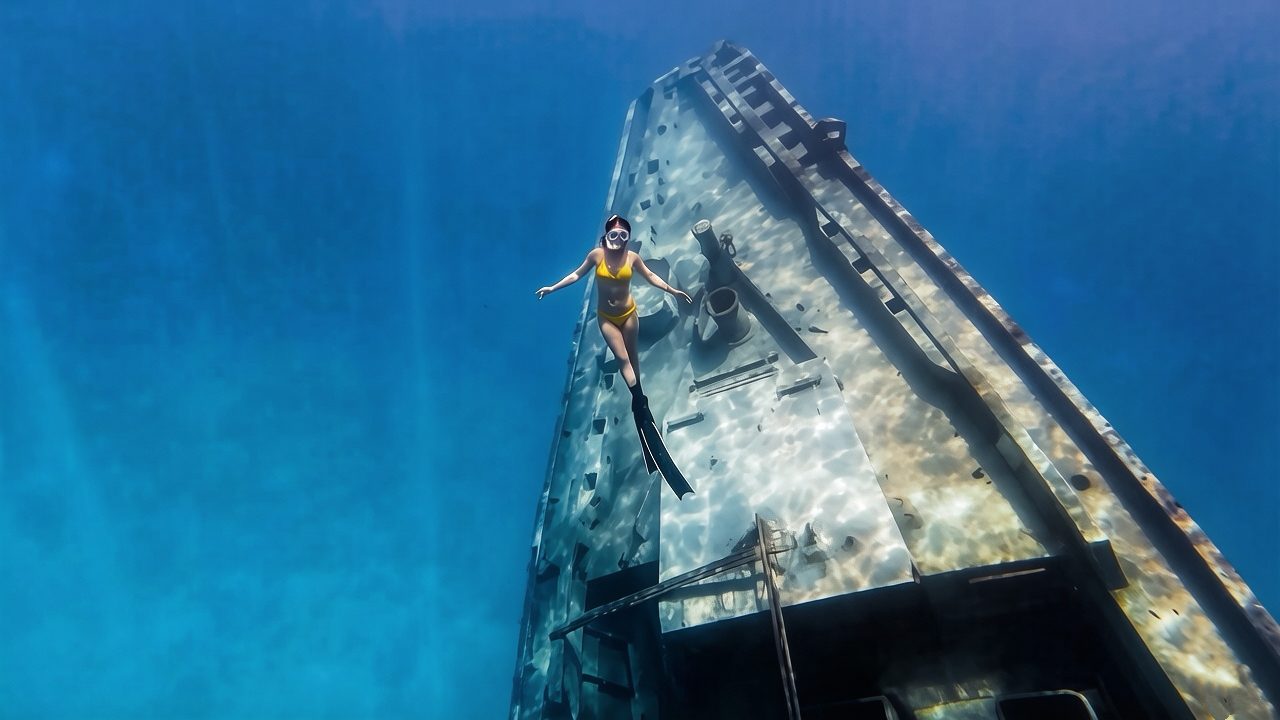
The wreck site · on a single breath
Want "God's fish tank"? Hulhumale is close to it, but in low season you must charter the whole boat — $150 for three people, one site only. From Maafushi, the biggest local island, the cheapest is still $80–100 per person. Famous does not mean good value.
5. The three things that saved us the most
- Bring your own camera gear, save $20–50. I brought a drone and an Osmo Action 6 and the boat crew shot with them for free. Hiring someone is $20 per site, or $50 for three sites in a day.
- Cook for yourself, save over ¥2,000 each. There isn't much good food on the island, so we carried a big box of food and cooked most meals. Anything we caught, we paid a small fee to have it cooked.
- Book boat trips directly with boat owners. Through the hotel it's roughly double, with underwater photos, drone shots and swim rings all as paid extras. Convenience costs money; walking to the jetty saves it.
6. What to pack
Start with a counter-intuitive one: don't buy a SIM card. Activate your Chinese carrier's "Belt and Road" roaming data pack before you fly — mine cost ¥23 for 8 days. We did buy a local SIM and barely used it: airports and hotels have Wi-Fi, everywhere worth going is walkable, and taxis can be hailed on the street.
| What | Why |
|---|---|
| Sunscreen | 8am–4pm is too hot to be outside. Sunburn is the most common way people wreck this trip. |
| A jacket + long trousers | The cabin is freezing, especially on AirAsia |
| A hat | Very little shade on the island, none on a boat |
| Dive socks | For reef, shallows and the stingray area — bare feet get cut |
| Disposable snorkel mouthpieces | The captain provides mask, snorkel and fins, but the mouthpiece is shared. Yours costs a couple of yuan. |
| An underwater camera | Rent one online — around ¥100 for 10 days. Far cheaper than renting on the island or paying per shoot. |
| Long fins | Freedivers, bring your own; renting costs tens of dollars, and most islands don't rent them at all. |
| A swim ring | The hotel's version is a paid extra |
| Several bikinis | Good for photos, everything stays damp at the beach, and they take up almost no luggage space |
7. What you can do for free
Most people choose an island by looking at the beach, but what you can actually do every day is what decides whether a trip is worth it. On Fulidhoo, all of this is on the island, free:
- Sunrise, sunset, stars
- Snorkelling: swim out and you hit a drop-off wall — ideal for practising freediving (I'd just finished my AIDA 2 course, and this was my first trip after it)
- Bikini beach: the only place on the island where swimwear is allowed — rare for a local island
- Glass-clear shallows / the lagoon
- Stingrays and nurse sharks: the jetty draws a crowd of them every day. This is Fulidhoo's signature.
- Hand-line fishing: straight off the jetty or the breakwater, and you eat what you catch. Moray eels especially.
How busy can one island day be? Sunrise, morning fishing, a boat trip, a midday nap through the hottest hours, then afternoon snorkelling, bikini-beach photos, sunset, night fishing. My friend says I showered three times a day and my hair never dried — but I was happy every single day.
This is where I started to understand fishermen — the place is so abundant that anyone can catch something. Worst case you get crabs and shellfish, ridiculously sweet and fresh. The one I still think about is a moray eel as thick as my calf, braised in soy sauce — excellent. We've already promised each other a return trip to the Maldives, just for the fishing.
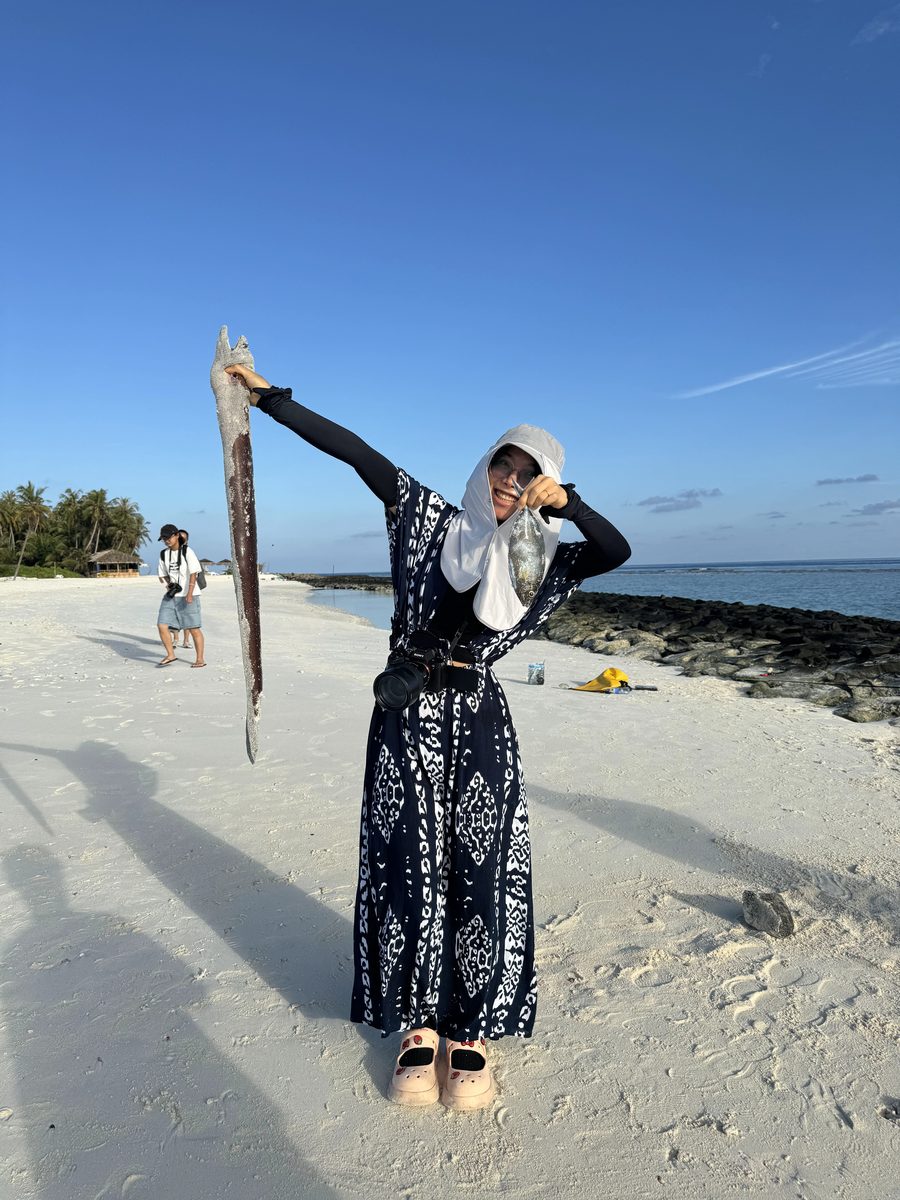
That's the one · later braised in soy sauce
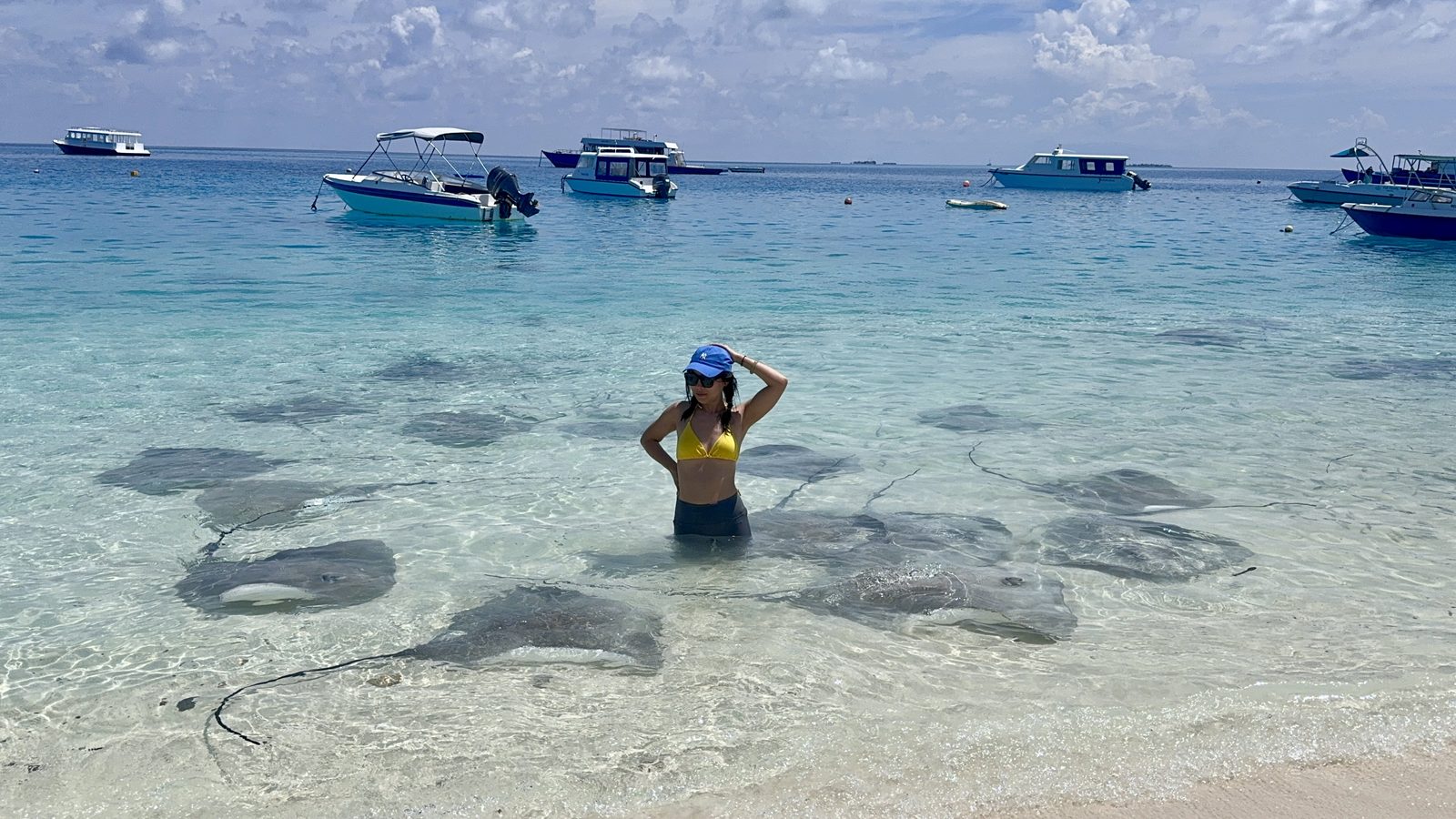
Stand in the shallows and stingrays glide right past your feet
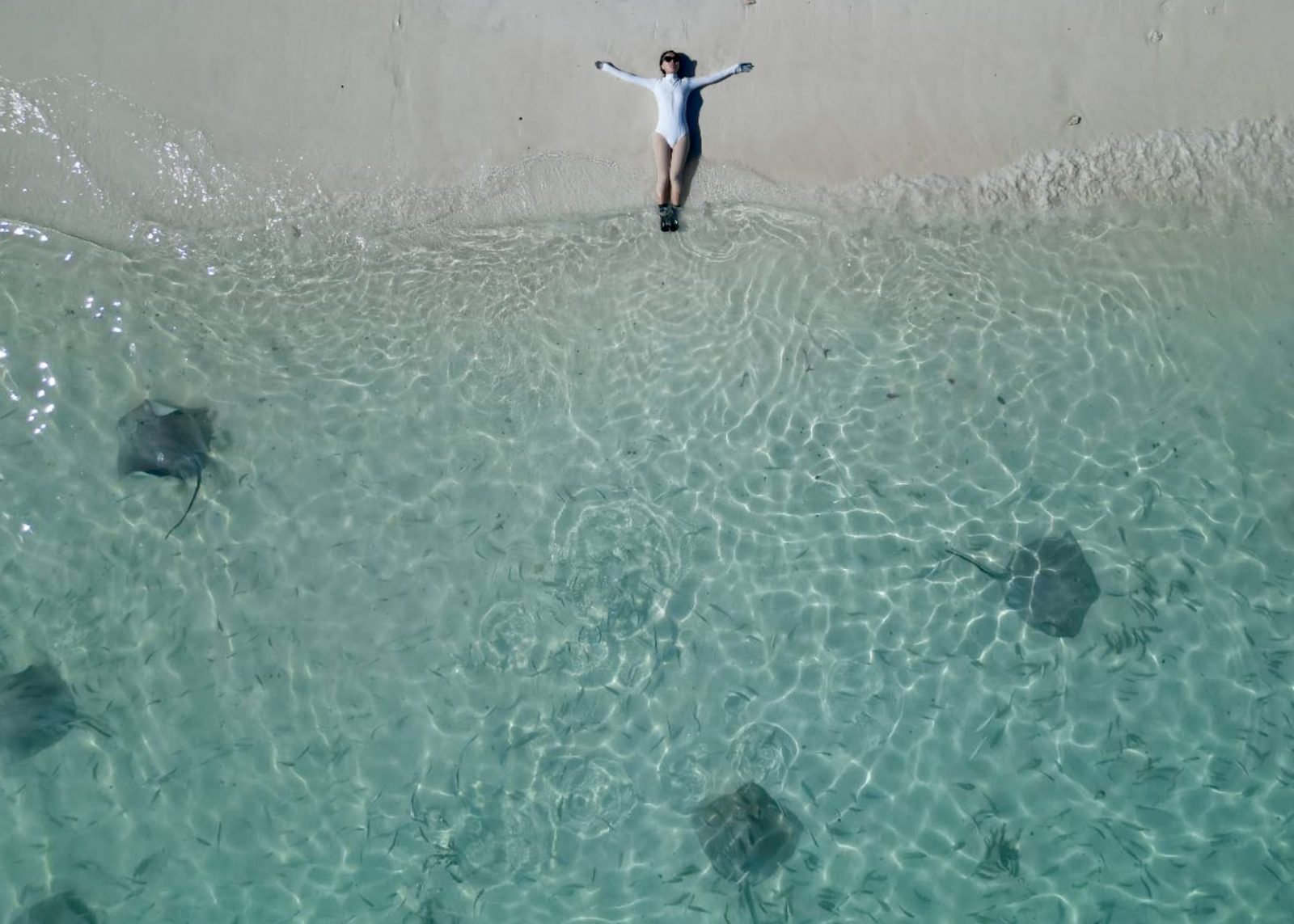
The same shallow flat · shot from above
(Being honest: the Maldives as a whole doesn't have that much coral. Don't build your hopes up on that.)
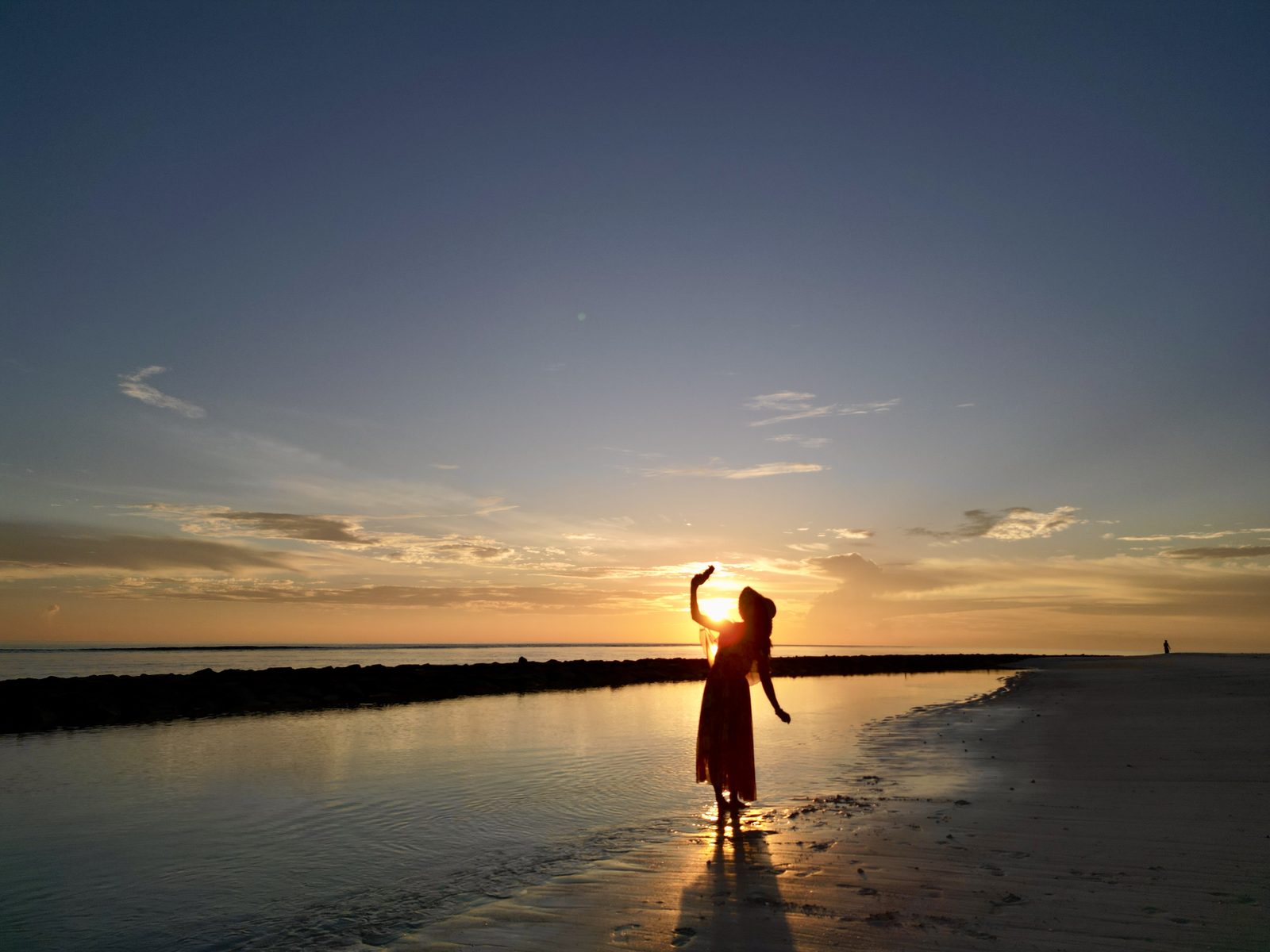
Sunrise · Fulidhoo
8. Dress code, weather, and one warning
Dress code
The Maldives is a Muslim country, so dress matters in public. On Fulidhoo there is exactly one "bikini beach" where swimwear is allowed — nowhere else, including for photos. The stingray spot is a tourist spot, so swimwear is fine there too.
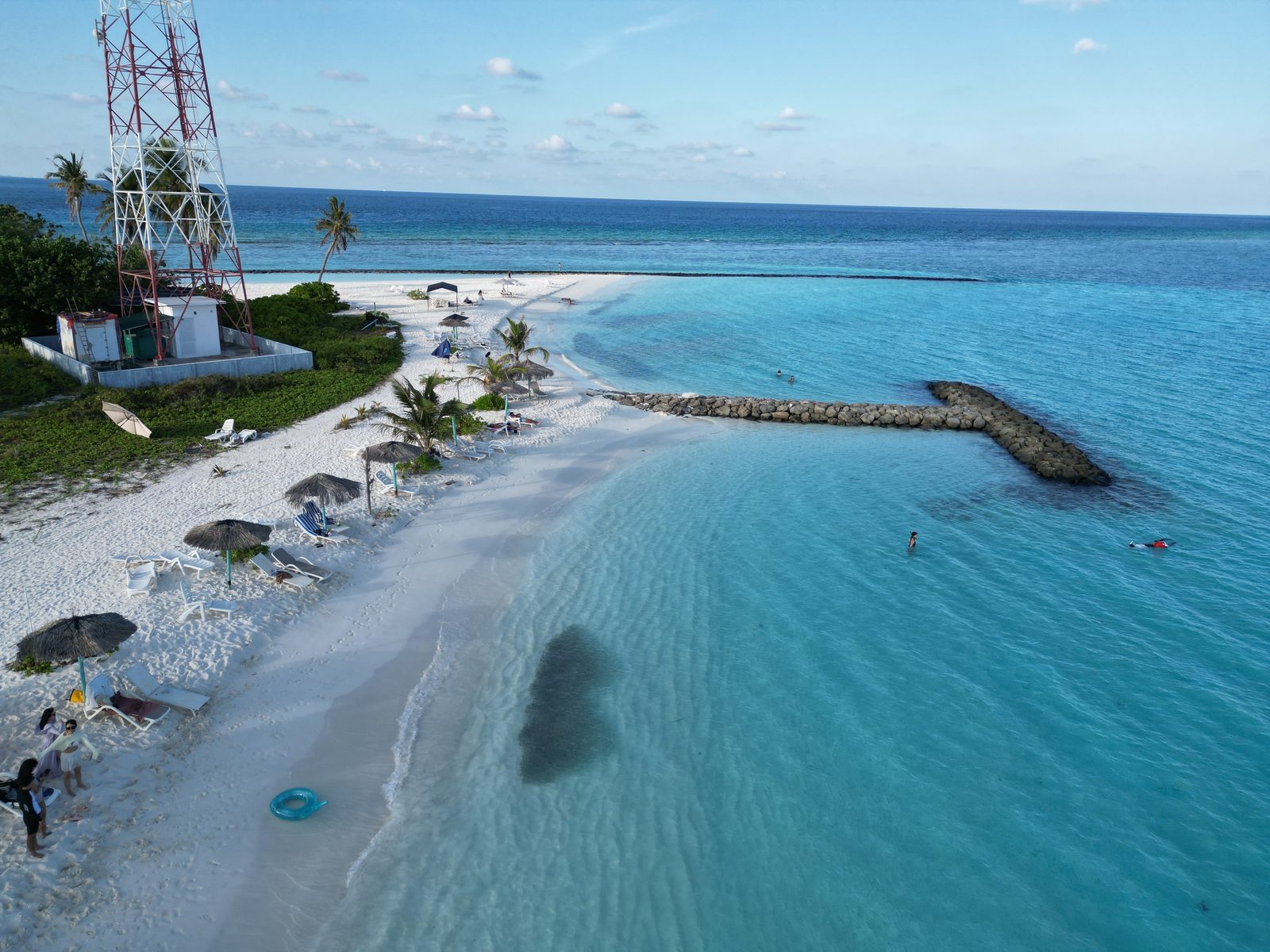
Bikini beach · the only swimwear-permitted stretch
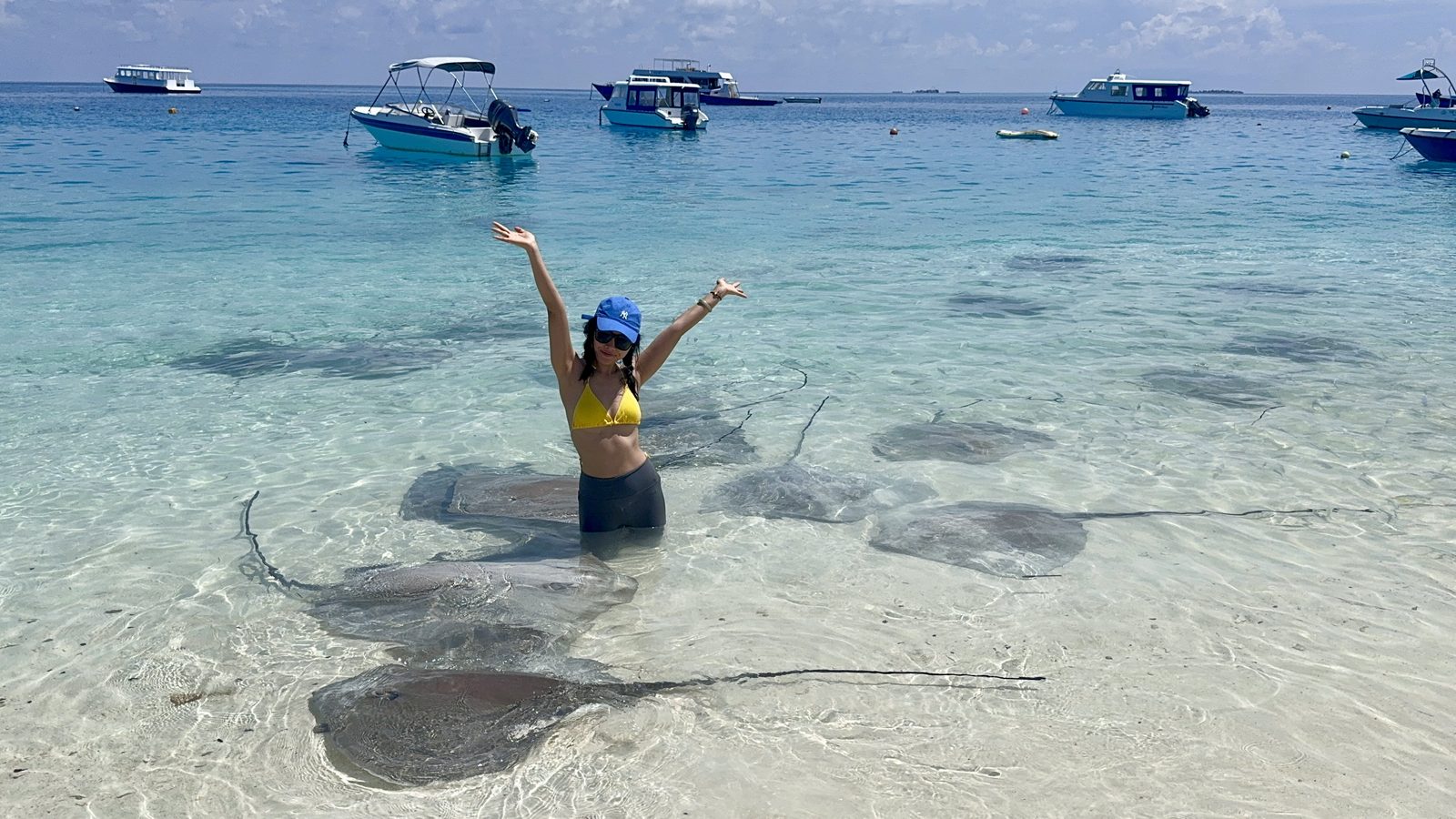
The stingray sandbank · a popular photo spot, swimwear allowed
How it felt overall: the locals we met were kind, nobody stared, and as a woman travelling here I felt safe.
Weather
We landed 31 March and left 7 April — 8 days, 7 nights in the country — avoiding Ramadan. April is technically rainy season, but apart from rain on the day we left, it was sunshine every single day. Plenty of people hit haze in February, and friends on a resort island had days of rain at the same time. Generally, by April the rain is mostly over.
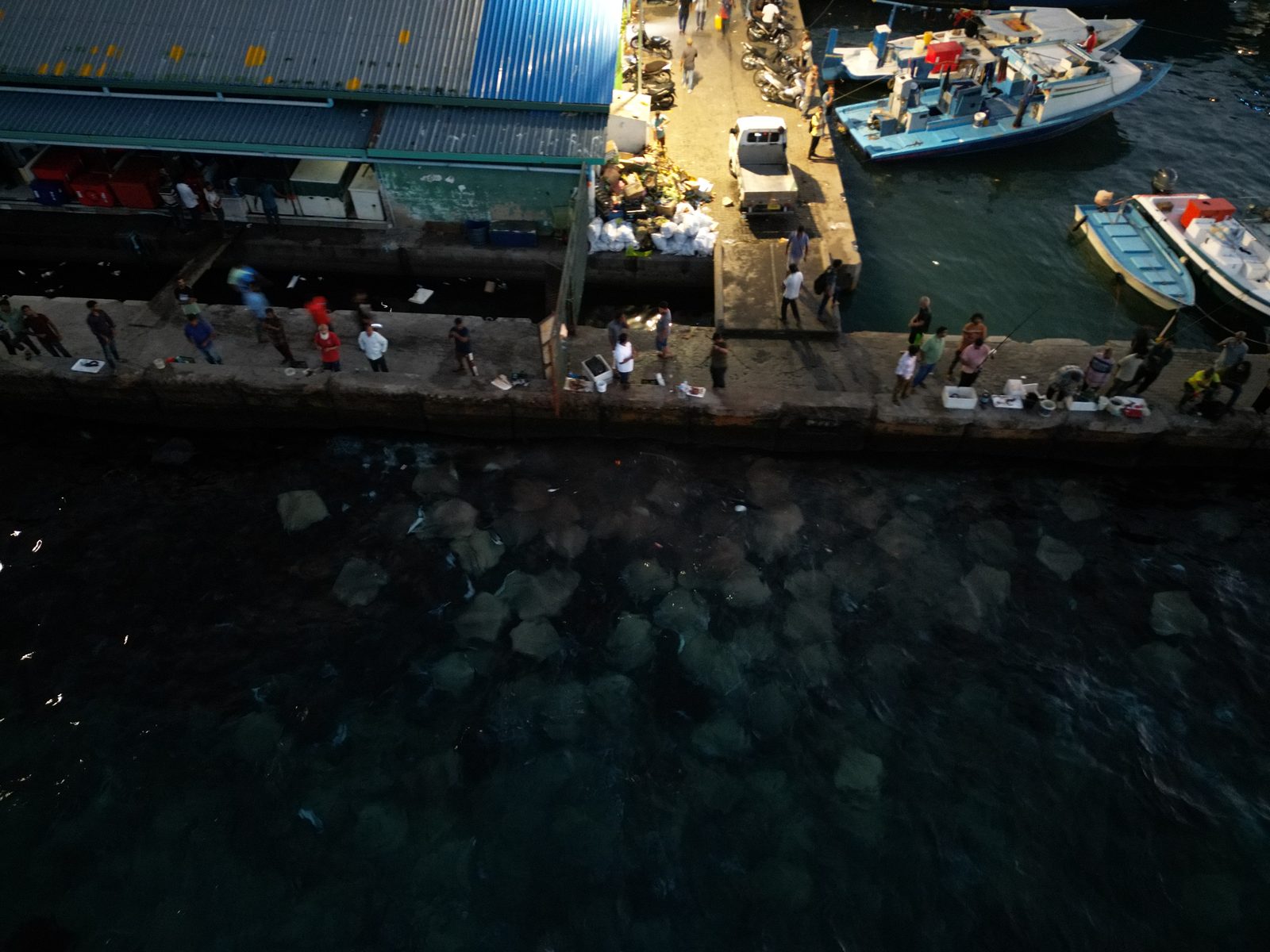
The day we left · the jetty in Male, and a "stingray storm" after dark
One warning I have to include
There is one Chinese restaurant on the island: $12 per fish to have your catch cooked, boat trips quoted noticeably higher, poor service. But what actually bothered me was this — on a dolphin-watching trip they left a guest who couldn't swim in the water while the boat went off chasing dolphins. A life jacket doesn't stop you panicking, and that trip ended badly.
I don't usually write warnings like this, but when it's about safety I want it written down. There are plenty of boats on the island — walk a bit further, ask two or three, don't just take the easiest option.
9. Practical info
| Item | Details |
|---|---|
| Trip | Arrived Male 31 Mar, left 7 Apr 2026; 8 days / 7 nights = 5 Fulidhoo + 1 Male + 1 Hulhumale |
| How long to stay | At least 5 nights on Fulidhoo; keep a night either side in Male / Hulhumale (the ferry only runs 3 days a week — you need buffer) |
| Visa | 30 days visa-free on arrival for Chinese passport holders (check the latest official policy before you fly) |
| Flights | Mainly AirAsia; under ¥2,000 from the Greater Bay Area when cheap, under ¥3,000 elsewhere — usually no checked baggage. No free food or water on board, and the cabin is freezing — bring a jacket and long trousers, buy water in the lounge |
| Accommodation | ¥300–500 per person per night is normal; whether meals are included drives the price — compare |
| Getting there | Speedboat $50 pp (1 hr); public ferry $3.50 pp (4 hrs, 3 days a week only) |
| Island fees | $5 per person per day cleaning fee (some blogs call it an "eco tax" — same thing). We paid $30 for 6 days on the island. |
| Money | USD works everywhere; rufiyaa converts at about 1:20. $100 per person in cash is plenty — you lose on the rate changing it back |
| Data | Skip the SIM card — activate your Chinese carrier's "Belt and Road" roaming pack before you fly (¥23 for 8 days on this trip) |
| Bring | Sunscreen, a hat, dive socks, disposable snorkel mouthpieces, an underwater camera (rent online, ~¥100 for 10 days), long fins, a swim ring, several bikinis, and a big box of food |
| Not for | Anyone who hates sun, cares deeply about food, or hates hassle |
The Maldives isn't expensive. What's expensive is not knowing that it doesn't have to be.
Same sea, same sharks — some people pay three times as much and see exactly what we saw. The difference is that we walked down to the jetty and asked the price, carried our own food, and brought our own cameras.
See you on the next one.
I'm Smile, AIDA2 freediver, making content with real footage and real receipts on the road. Next up: Semporna.
This is the second post in my "real receipts" series. The first is The Same Sea, 8 Years Later: My Second Philippines Loop — also with every price included.